
Marine animals
Minke Whale
The smallest of the rorquals, Minke males can grow to 9.8m (32’), females to 11m (36’) and weigh up to 15 tonnes. Dark grey / blue black on the back, the Minke’s body lightens to white on the belly and undersides of the flippers, which have a distinctive diagonal white band on their upper surface. The most common in these waters, Minkes are curious and often come very close to passing boats. They can swim at more than 20 knots, and their dives can last up to about 20 minutes. With sightings from early in the season, the peak time for Minkes is from the end of July until September.

© – Arthur Campbell, Arisaig
Humpback Whale
Humpback whales are huge baleen whales, starting at about 4.1 meters as newborns and reaching 11.5 to 15m as adults. They have sleek bodies with flat, knobbly heads covered in tubercles, and a small, often uniquely shaped dorsal fin set about two-thirds down their back. Their colouring is mostly black or grey, with white throats, bellies, and long flippers, while their wide, notched tail flukes have partially white undersides. Their blow is a bushy vertical spout reaching 2.5 to 3m high. Although usually rare, they were spotted towards the end of the season.
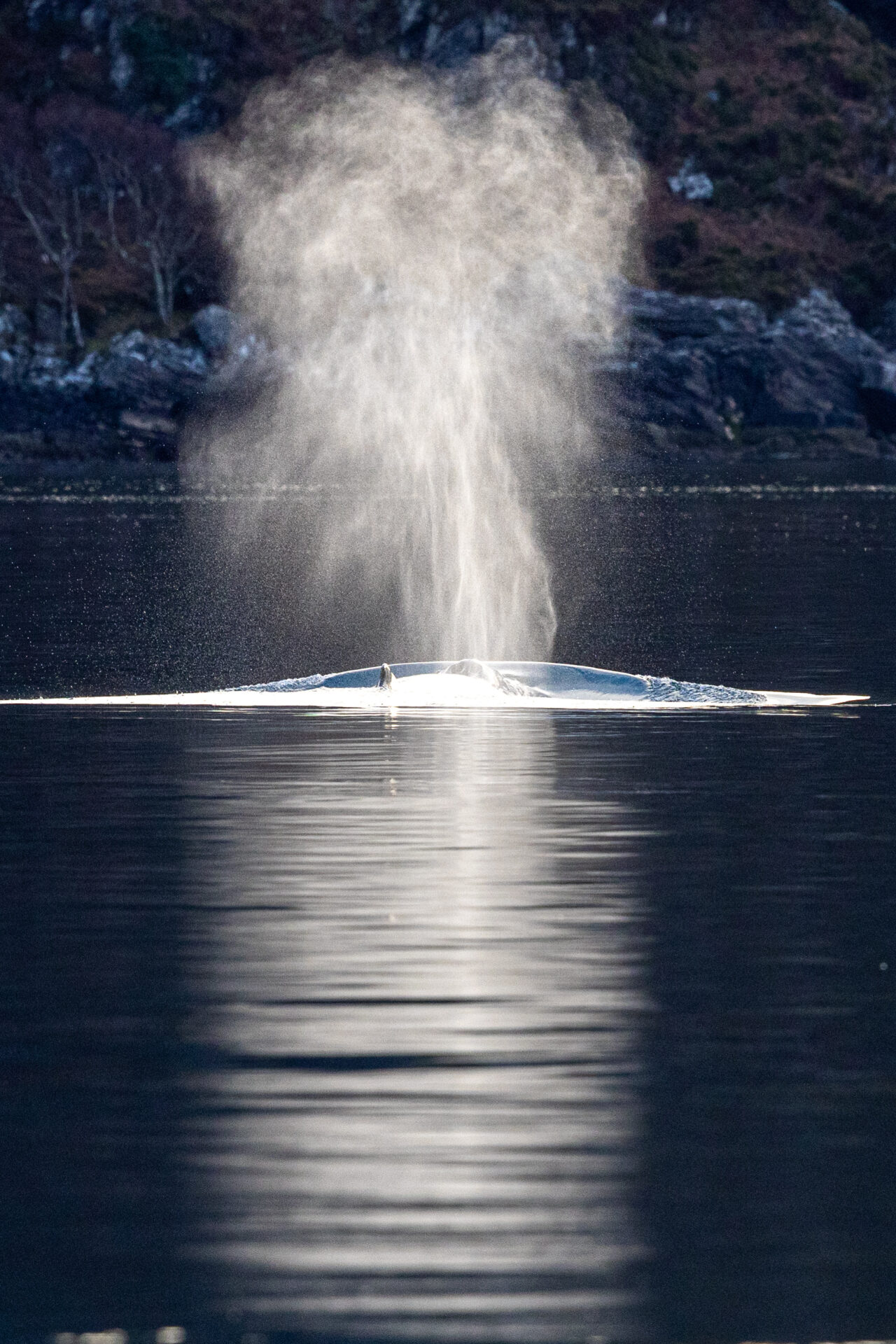 © – Stephen MacDonald, Morar
Basking Sharks
Basking Sharks are quite rare, with a record number of sightings in 2005. They can grow up to 10m in length and up to 7 tonnes in weight making it one of the biggest fish in the world. Basking Sharks feed on plankton. They have no teeth and strain seawater through their gills at up to 330,000 gallons per hour! Best sightings are generally in late summer although we haven’t had a lot of sightings lately. Previously heavily fished for its liver oil, meat, fins and cartilage, Basking Sharks are now protected.
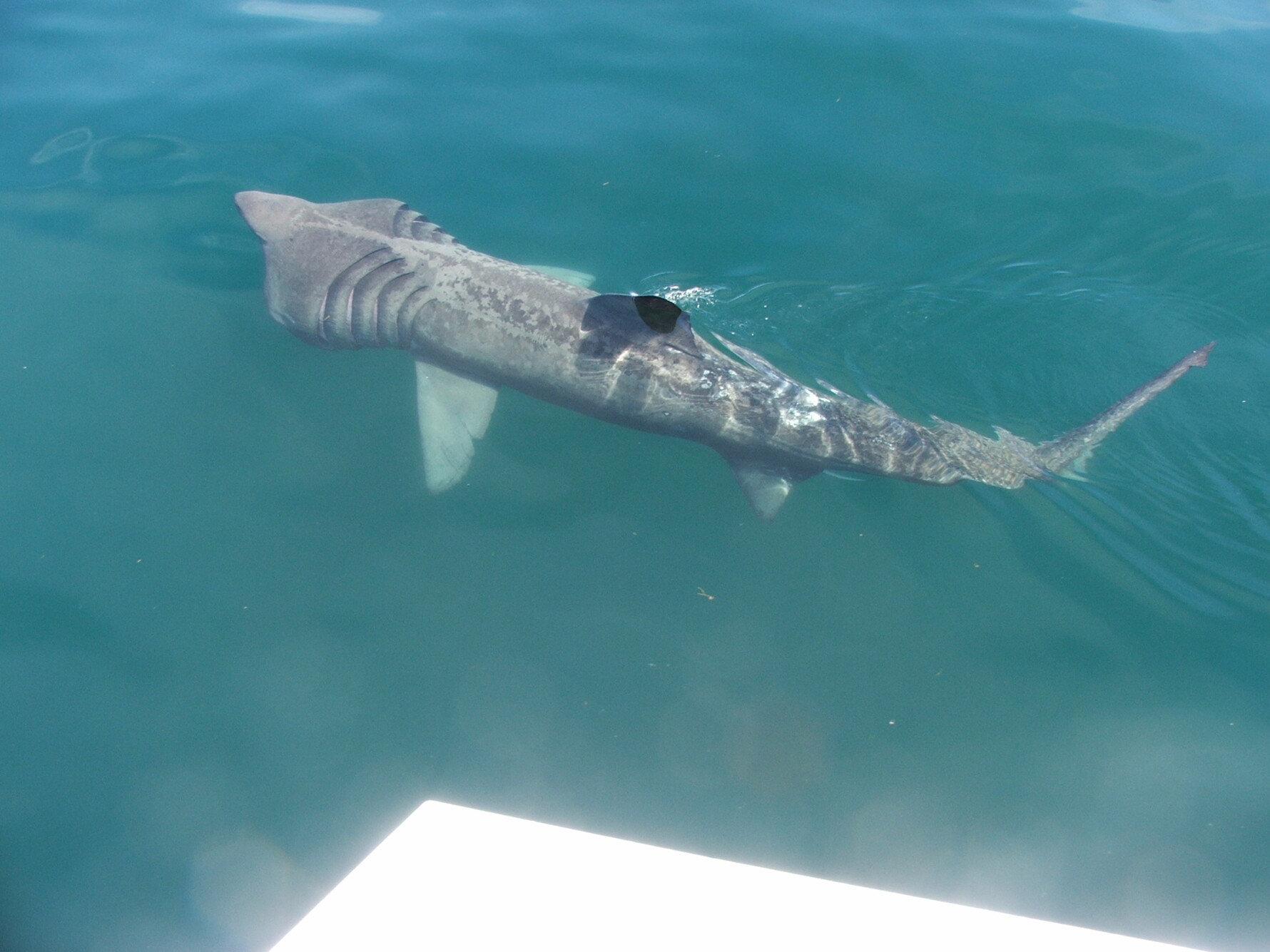
© – Arthur Campbell, Arisaig
Porpoises
Porpoises, often seen all season, although not at close quarters, are the most common, and smallest (average size 1.5m), cetacean in Scottish waters. Very shy and wary of boats, they like to keep their distance. Diminutive and dark, they do not leap out of the water but travel in a rolling motion only ever showing their back and dorsal fin. Travelling alone or in small groups, with a short lifespan (rarely more than 12 years) porpoises feed on fish such as mackerel and herring.
Dolphins: Bottlenose / Common / Risso
Bottlenose Dolphins, usually seen in groups, love to leap out of the water and bow ride. Very active and exciting to watch, their average size is about 3m. They mainly feed on fish, like sand eels and crabs. Recognisable by their uniform grey / blue colour, prominent beak and lack of obvious markings, they often swim close to shore and amongst the rocks unlike the Common Dolphin which tends to stay out at sea. Common Dolphins usually travel in large schools and, on average, grow to around 2m. With a similar diet to the Bottlenose dolphins, they can be recognised by a yellow patch on their flanks; this is not obvious on all. Less frequently seen in these waters are Risso dolphins. Of similar size to the Bottlenose, but without the beak, they have a very tall dorsal fin and a blunt head with a bulging forehead.
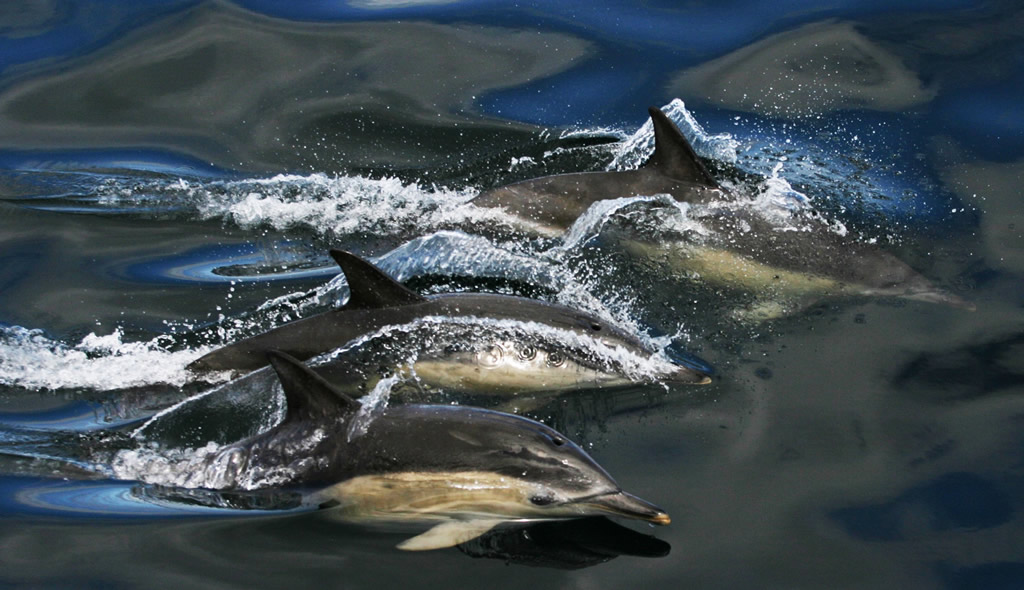
© – Arthur Campbell, Arisaig
Orca (Killer Whale)
Although not a regular visitor, several sightings are made each year. Killer whales, or Orca, reach an average size of 8m. Easily recognised by their tall dorsal fin, they have white patches above the eye and on the flanks. The largest member of the dolphin family, they usually live in family groups hunting sharks, seals, porpoises and fish. Orcas, the top ocean predators, are among the fastest animals in the sea. Adult Orcas weigh an average of 4 tonnes. Females can live to 80 years and the males up to 60 years.

© – Arthur Campbell, Arisaig
Grey Seal / Common Seal
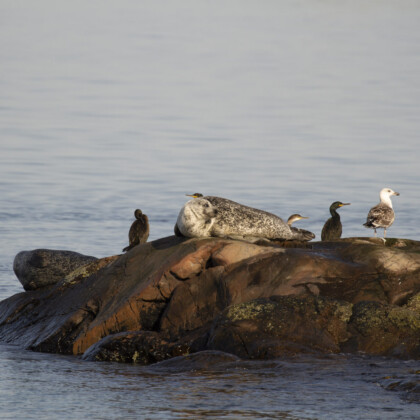
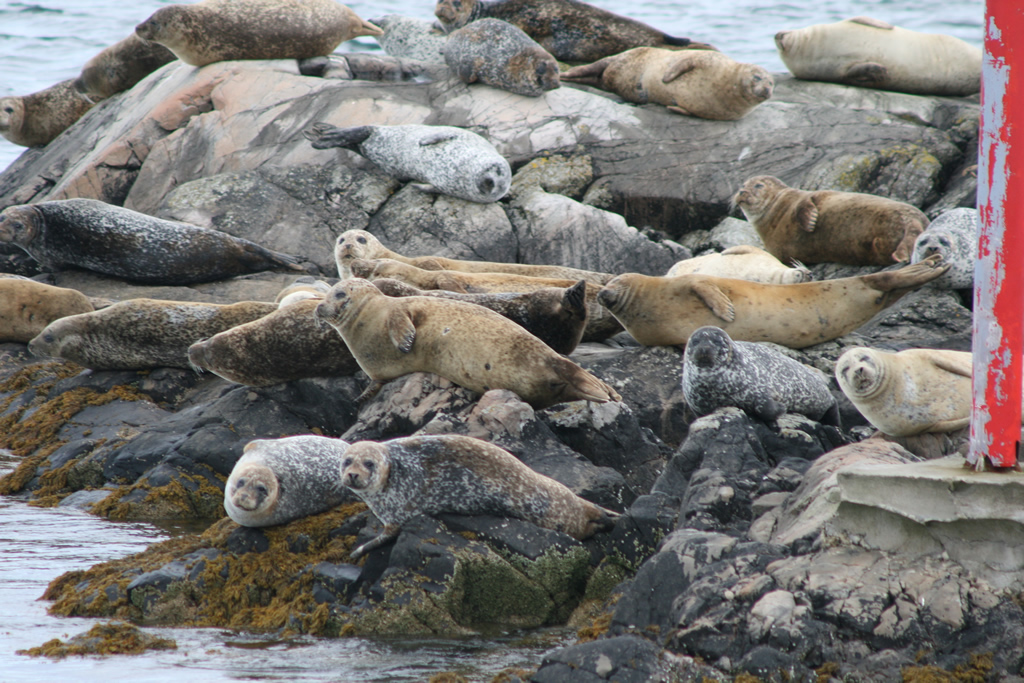
A large seal colony lives at the mouth of the channel and most days, especially with low tides, they can be spotted lazing on the rocks. Very curious, they like to see what is going on and often approach stationary boats. The Common Seal is roughly 2m long; the male weighs approximately double the female. They breed between June and July and it is estimated that 90% of the UK’s 33,000 common seals live in Scotland. While the Grey Seal is also roughly 2m long, both male and female are a lot larger than the Common Seal. Grey Seals in Scotland are estimated to be 40% of the world total of 120,000.
© – Arthur Campbell, Arisaig
Otters
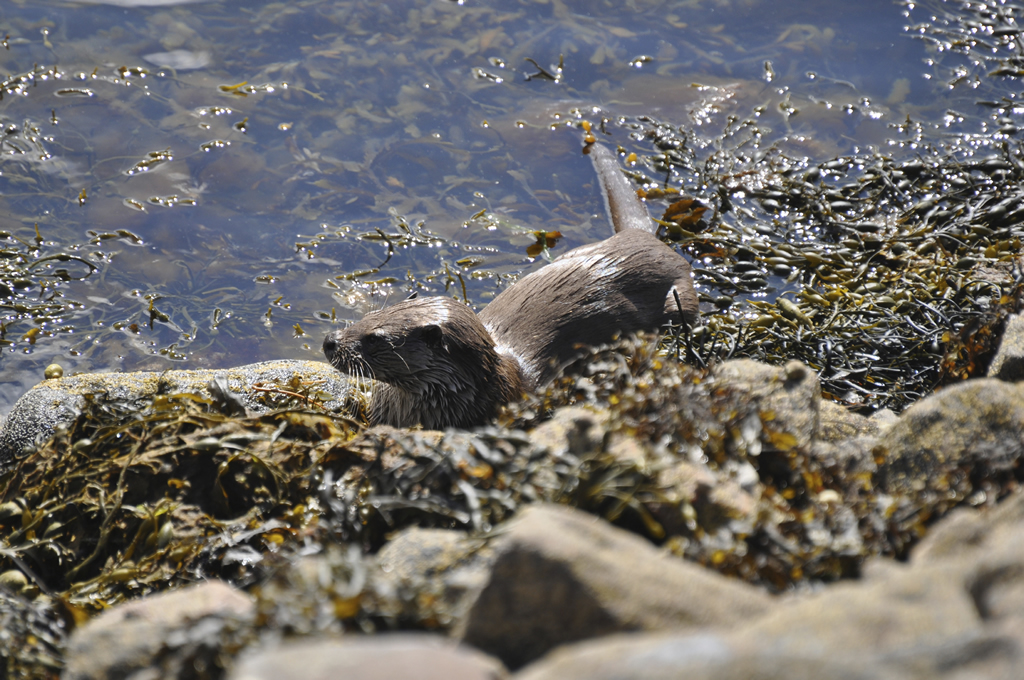
Otters can be spotted Arisaig bay as well as on all of the islands. With two layers of fur – a thick waterproof outer coat and a warm inner coat. They grow up to 1.3m and their webbed feet help propel them through the water. An acute sense of sight, smell and hearing helps them detect and catch their prey of mainly fish and crabs.
© – Arthur Campbell, Arisaig